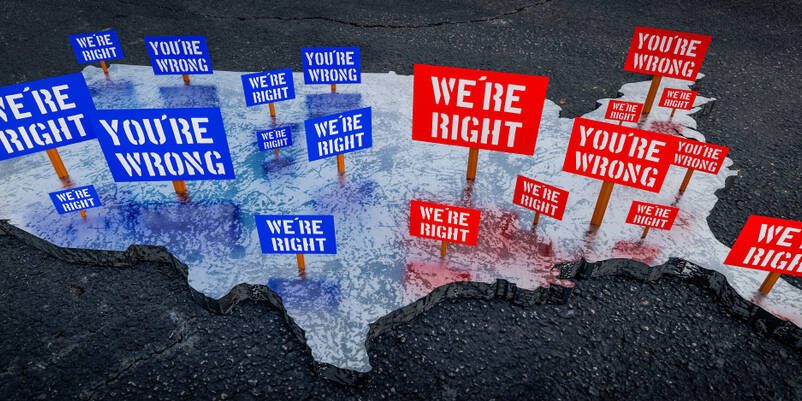

There are a few things you ought to know about Gen Z. Firstly, we’re often branded as lazy snowflakes. Secondly, we’re one of the most vocal generations to date. You’re unlikely to find anyone more in tune with news around social justice, or more willing to discuss various forms of inequality, than Gen Z. But, as it happens, we also suffer from a bad case of ‘slacktivism.’
According to a 2021 study, which surveyed 10,000 Gen Zers across the world, 70 per cent of young people are involved in a social or political cause, whilst a third are regular activists as of 2025.
Trouble is, the majority of this advocacy is being carried out online, and so two inevitable questions arise: Are Gen Z actually making a difference in the real world? And do they truly care about the causes they advocate for?
Climate Conundrum
The environment regularly tops the list of causes that are most important to young people. Nearly three-quarters of Gen Z are ‘extremely worried’ about climate change and its effects on the planet. They are also the generation who are most likely to take action against climate change, both online and offline.
Imagine their horror, then, when they find out they are the ones fuelling the rise of fast fashion giants like Shein. Having been valued at less than a billion dollars in its early days, the online Chinese retailer is now worth approximately $30bn (£22.6bn), thanks to its enormous popularity with Gen Z. However, Shein has a bad reputation.
With 600,000 products available on its website at any given time, the firm is notorious for churning out new stock daily and discontinuing styles that are no longer in fashion at an equally rapid pace. But what happens to these unsold items? They end up in landfills. Fast fashion ‘dumps,’ areas in which millions of tonnes of unwanted clothing are discarded, are burgeoning in Chile, Indonesia, Ghana and India, causing widespread harm to local populations and ecosystems. Still, this news has done little to deter Gen Z shoppers, who remain loyal to Shein because of its ridiculously cheap prices — with the average item costing just £7.90.
Despite recent rises to the National Minimum Wage, cash-strapped Gen Z are still battling the high cost of living and low disposable income. To treat themselves to clothes and other accessories, they turn to affordable retailers like Shein. But if Gen Z had any real principles, they would simply refuse to make any unnecessary purchases, unless the items were sustainably sourced. For all young people’s concerns about the environment, they have clearly chosen to turn a blind eye to Shein, despite its track record of questionable workers’ rights and its impact on the environment.
Adverse to Volunteering
Whether it be in the classroom or the comments section, young people happily complain about our crumbling social cohesion. Yet they do not seem prepared to get off the sofa and do something about it.
Admittedly, statistics on the number of young people who volunteer are incredibly varied. A survey from the British Heart Foundation reveals that 94 per cent of Gen Z ‘would consider’ volunteering. However, other sources claim half of this age group believe volunteering to be ‘uncool,’ whilst data suggests that the number of young people actually volunteering stands at 32 per cent, up 11 per cent from over a decade ago. This gradual increase can be attributed to the compulsory voluntary work needed to complete the Duke of Edinburgh award and certain university courses.
If you need any evidence that Gen Z are reluctant to give back to their local communities, just consider their horrified reaction to Rishi Sunak’s idea of reinstating National Service in 2024. Theoretically, this would have meant that 18-year-olds in the UK would have had to volunteer at the NHS, the Royal National Lifeboat Institution or a constabulary one weekend each month. Despite this chance to contribute to the public sector, 48 per cent of Gen Z opposed Sunak’s suggestion, and a further 30 per cent were either ‘undecided’ or ‘didn’t know.’
Young people claim to champion the environment, but they are fuelling the fast fashion industry. They lament the state of our country, but refuse to take steps to help improve it. It’s time Gen Z practised what they preached.
Power of Protest
On the flip side, younger generations have certainly harnessed the power of digital platforms. They feel they are making their voices heard. Thanks to apps like LinkedIn and Instagram, young activists are now able to reach out to more people than ever before. Moreover, online campaigns like the #TakingThePIP, #MeToo and #BlackLivesMatter movements were hugely successful. They raised awareness of institutional racism and sexism on a global scale, averted drastic changes to disability benefits and helped bring perpetrators to justice.
But evidence suggests that real change begins when we put down our screens and pick up our placards. Protesting is a hugely effective way of putting pressure on politicians. It has ousted dictatorships and rewritten laws. How? Because the 3.5 per cent rule dictates that any protest which involves at least 3.5 per cent of the country’s population will never fail to bring about policy change. Some of the most famous protests in history were ignited by young people: the black youth presence during the March on Washington, college students opposed to the Vietnam War in the ’60s, young feminists in the ’70s and lads who worked in mines in the ’80s.
Yet, there seems to be little enthusiasm from today’s youth to employ this tactic. Watch any videos about recent protests, whether that be about immigration, abortion or farming, and you’ll notice the majority of the people in the crowd appear to be Baby Boomers, Gen X and Millennials. From Liverpool’s ‘Nans Against Nazis’ to London’s Palestine-supporting pensioners, it’s the mature folk that are getting off their behinds and taking to the streets. Older generations seem to understand the power of unity, while socially awkward, screen-obsessed Gen Z lack the motivation to gather in crucially large numbers.
Activism is more than just a hashtag. Online advocacy is a good starting point, but until younger generations evolve past their obsession with performative activism, they will never be forces for real change. Gen Z must learn that actions speak louder than words. Only then can they make a tangible difference in the world.
DISCLAIMER: The articles on our website are not endorsed by, or the opinions of Shout Out UK (SOUK), but exclusively the views of the author.