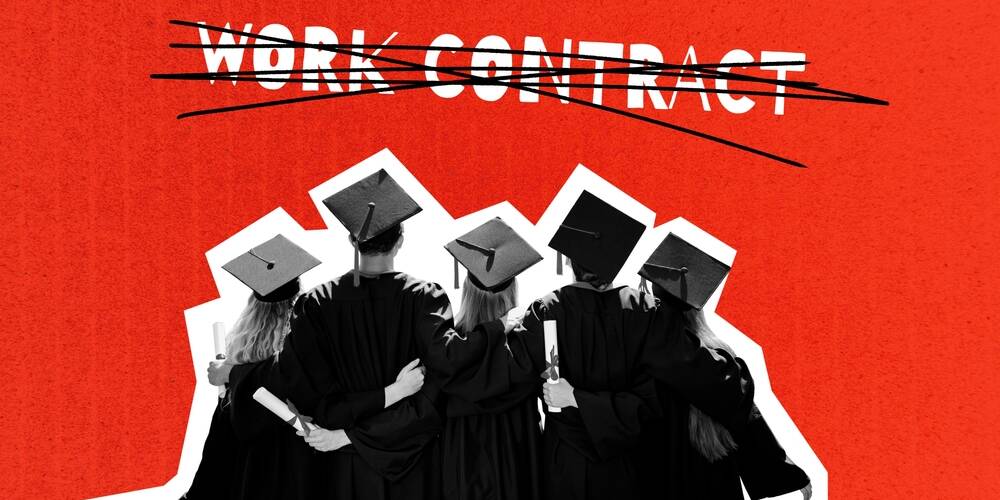

For many young people, financial terminology can seem like a different language.
While studying Economics has helped me understand words like ‘inflation’ and ‘interest,’ when it comes to having a more in-depth knowledge of Finance, I am still clueless as to what certain words mean and how they could potentially affect my future.
I’ve probably learnt more about money from listening to ‘Ain’t Nothin’ Goin’ On But The Rent’ by Gwen Guthrie, than I have during my time at school.
What’s more, I’m not the only one who feels this way.
A 2023 study concluded that almost two-thirds (61 per cent) of young adults in the UK don’t recall receiving any financial education at school.
Could Finance Skills Trump Certain GCSE Content?
A solid knowledge of finance and basic numeracy skills are the foundations upon which a successful life can be built. Currently, financial illiteracy is costing the average household almost £3000 a year. For this reason, understanding how money works is vital for young people who are looking to build a financially secure future.
Because an estimated 5.4 million children in the UK lack the basic financial skills needed in adulthood, some MPs, such as Chair of the House of Commons Education Select Committee Robin Walker, have launched an investigation into the provision of financial education in primary and secondary schools.
‘With families and young people continuing to feel cost-of-living pressures, the case for equipping children of all backgrounds with the life skills and knowledge to help manage their money feels as strong and timely as ever,’ Walker told the Financial Times. ‘Teaching people how to manage interest on a debt, for example, might be more important than some of the academic content that’s currently in GCSEs.’
Getting Help Navigating Finances
The lack of financial literacy amongst young people is the reason why Abigail Foster founded Elent, a business offering workshops on Finance to schools, universities and workplaces.
‘There wasn’t enough financial education happening for our next generation,’ Abigail said of founding Elent in 2021. ‘If we are to see an end to inequality gaps such as the gender pay gap, we need to educate [young people] before they become financially active.’
However, a lack of financial education for young people is not the only issue. There is a gender imbalance when it comes to financial literacy as well.
Evidence shows that financial illiteracy disproportionately affects women, which Abigail attributes to ‘the feminisation of modern debt, such as buy now pay later schemes and TikTok … showing a vast array of (not always qualified) financial education’ that leaves women and young people, ‘struggling to get the right answers and support for their issues.’
Young People Are Turning to TikTok
Having received inadequate — or nonexistent — financial education in school, Gen Z are now turning to popular social media apps for advice.
Around 58 per cent of 18-24-year-olds listen to TikTok influencers for advice on money, personal finance or budgeting. But while some influencers may be sharing genuinely useful tips, many are not qualified to give such advice and they should not be the only source of financial education for the younger generation.
Some influencers have even been known to exploit their viewers’ lack of financial literacy and profit off of it.
Andrew Tate’s infamous Hustlers University, which has since been renamed The Real World, is an online course with lessons on cryptocurrency, side hustles and how to earn enough money to afford a luxurious lifestyle.
The former kick-boxer, who has gained notoriety in recent years for spreading misogynistic content on the internet, charges members £40 a month to ‘learn’ how to become a billionaire.
However, Tate has been accused of exploiting young people’s insecurities and financial worries for his own gain. With over 113,000 students, memberships must generate Tate about £54m a year (if we assume that no members cancel their subscriptions during that time).
He promises his members that they will gain ‘financial abundance,’ but according to an investigation by The Independent, many of his students are just desperate young people who are struggling to pay their bills and are looking for a solution.
How You Can Become More Financially Literate
If you find yourself feeling despondent and overwhelmed after reading this, fear not! Hope is not lost.
Abigail recommends several great ways young people can become more financially literate, such as by reading books on Finance and having open conversations with parents and guardians about money.
She also advises Gen Z to keep up to date with the latest news to stay informed about changes in the economy.
‘In the ever-changing realm of finance, adaptability is key,’ Abigail tells me. ‘Understanding that tax rates and financial norms can evolve ensures a well-rounded knowledge base, empowering individuals to navigate the dynamic financial landscape with ease and confidence.’
Thinking of, and preparing for, the future — no matter how far away it seems — is an essential habit to get into. However, one of the most common aspects of finance that people struggle with is pensions, according to Abigail.
‘It’s crucial to emphasise that while pensions are a notable avenue for retirement planning, they’re not the sole option available,’ she stresses. ‘Many individuals grapple with comprehending the intricacies of concepts such as auto-enrolment. Opting out of a workplace pension can inadvertently lead to missed employer contributions, illustrating the importance of informed decision-making to maximise financial benefits.’
In today’s increasingly unpredictable world, financial education has become more important than ever. The government must start taking responsibility for ensuring a basic level of financial education is made available in schools. For the sake of the next generation, this current oversight must be remedied by working essential life skills into the current curriculum.
Until then, here are some resources that young people can use to better understand the world of finance:
Resources
- Follow Elent on Instagram.
- Complete the Open University’s free course on managing money.
- Get advice on a range of financial issues.
- Watch a video discussing ways to make money.
- Sign a petition to make financial education compulsory in schools.
DISCLAIMER: The articles on our website are not endorsed by, or the opinions of Shout Out UK (SOUK), but exclusively the views of the author.

Related Posts