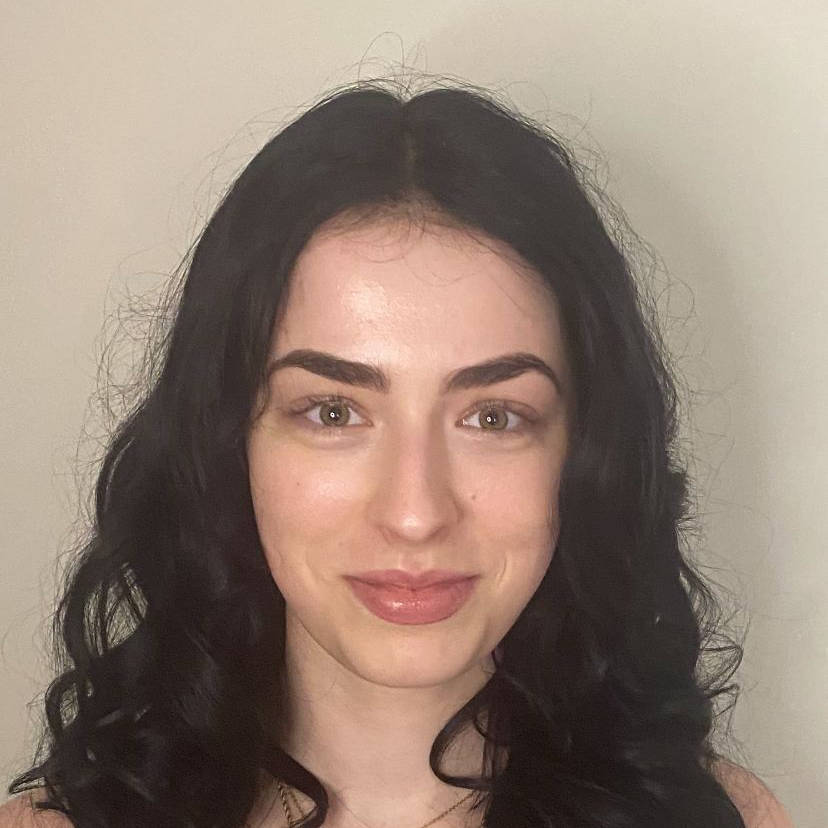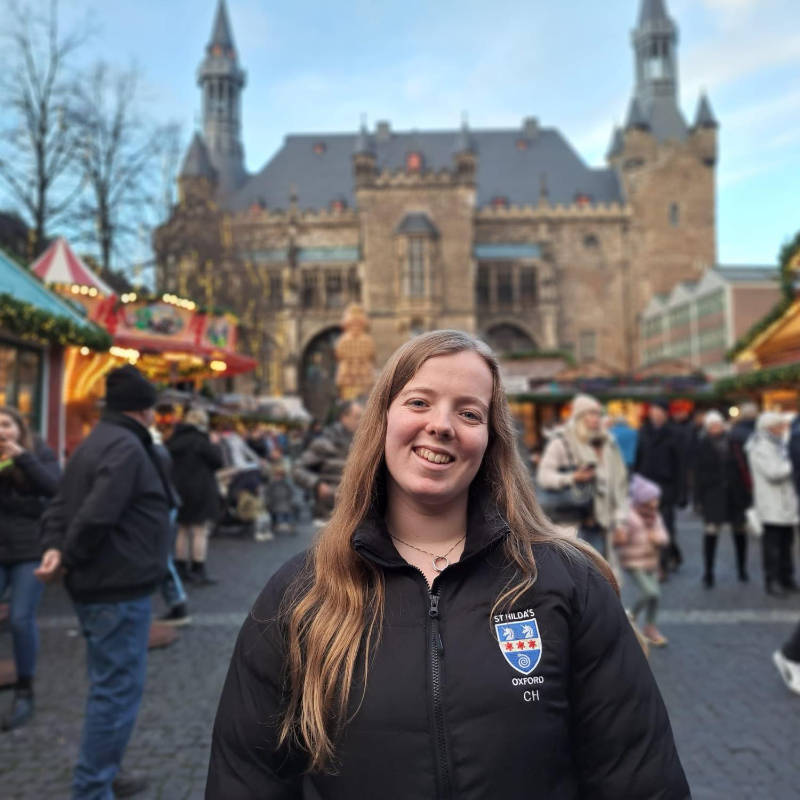

Laura Coryton took down the tampon tax. Now she’s trying to revolutionise sex education and empower young girls to stand up, speak up and engage with politics.
Sexism, ‘Unfortunately,’ Binds Us
Until 2021, Chanel handbags and tampons had one thing in common: the UK Government classed them as luxury, taxable items. This is still rightly true for luxury handbags, but thanks to Laura Coryton and her change.org petition, a feminist movement was sparked that changed the tax system for 51 per cent of the population.
‘I was just really into feminism when I first got to uni and I was studying politics,’ says Laura. She moved to London from Devon to study at Goldsmiths, University of London in 2014. During her time at university, she was sent an article by a friend that planted a seed of doubt about why she, and the entire female population, were paying into a sexist tax system.
‘I did some research into the tax system and found that some things aren’t taxed at all, because they’re considered to be essential for the public. And things on this list included maintaining private helicopters or eating alcoholic sugar jellies, and it specifies crocodile meats as essential and horse meats. Who in England eats horses?’
Now 31, Laura still lives in London and is studying for a PhD reimagining sex education in the 21st Century. During her time as an undergraduate student of International Relations, Political Science and Government, she found that while items many of us would agree are not essential go tax-free: ‘on the other hand, other things are taxed because they’re considered not as essential as these items and some of them are even considered a luxury. And period products were included on that list.
‘These tax rules were created by a very male-dominated parliament in 1973,’ explains Laura. In 1973, just over 4 per cent of the House of Commons comprised female MPs. Now, female MPs make up 40 per cent of the House of Commons. The highest percentage ever.
Laura decided to take action. ‘I just thought, you know what, I’m not going to just complain about this. I’m going to start a petition, even if just 10 people sign it, and 10 people feel maybe a little bit more confident talking about periods and talking about sexism, then it’s worth it.’
Laura started the ‘End Tampon Tax’ petition in 2014 and by 2016, it had reached over 300,000 signatures and sparked a movement that included protests, writing to MPs, and a march on Downing Street.
‘President Obama talked about it. I ended up getting random people emailing me from different countries across the world, saying that they want to start tampon tax petitions in their country, and we’ve now got sister petitions all over the world. So much is different in these countries, but this sexism, sadly, is something that binds us all together.’
A Breakthrough Deal, But …
In 2016, a deal was reached with the EU to allow the UK to drop the tax on period products and, in 2021, the tax was finally abolished. Laura says the movement achieved, ‘so much more change than I ever thought was possible at the beginning.’
This success story shows the impact of online politics and campaigning. Laura is encouraged by the different perspectives we get through this more accessible version of campaigning. ‘We’re hearing more voices, and a deeper variety of voices are being listened to. It’s just really exciting.’
However, despite the success of the petition, many big retailers have not cut the price of period products in line with the VAT exemption. Research has found that no more than 1 per cent of the VAT savings are passed onto consumers and the extra profit is being pocketed by retailers. Horrified to learn this, Laura started a new petition calling on retailers to cut their prices.
‘It has been very challenging,’ she admits. ‘There’s one thing petitioning the government to do something because it’s the right thing to do, and then there’s a completely different thing petitioning profit-making companies to do the right thing because it’s obvious that will affect their bottom line.’
Since 2022, the petition has amassed over 155,000 signatures. Despite no change happening yet, she is hopeful. ‘There’s a real public want for this to change, and it’s just going to take time and patience. We’re in conversations with M&S at the moment, and we did have some conversations with Boots as well. So yeah, getting there slowly.’
Even if this is successful, further actions are necessary to fully tackle period poverty. An Action Aid poll found that by 2023, 21 per cent of people who menstruate were struggling to afford period products. This is 2.8 million people and marked a substantial increase from the 12 per cent who were struggling to afford period products only a year earlier.
In 2022, Scotland became the first country to make period products free and Laura thinks that England and Wales should follow suit. ‘I have been in the most remote places [in Scotland], and I’ve gone to a public bathroom, and they’ve had a full stock of period products. And yet, we live in London and we can’t find any in the public spaces whatsoever.’
Let’s Talk About Sex
Following the success of her campaigning and her experience of talking in schools about tackling period taboos, Laura started Sex Ed Matters, a social enterprise aimed at ending sex and relationship taboos in schools. ‘The more I worked in schools, the more I realized that all that stigma and problems around periods are also true for a lot of other sex ed topics, like consent, sexualities, even rejection.
‘[In each school] there seems to be its own culture about what is acceptable and what’s not acceptable, she says. ‘We hear a lot of conversations about consent problems, especially on school transport, concerns about telling their parents about things, especially about sexuality, and concerns about talking to teachers and what they’ll, by law, have to tell their parents about afterwards.’
In 2020, the new Relationships and Sex Education (RSE) curriculum was launched. Sex Ed Matters aims to bridge this gap by delivering workshops, creating resources and supporting teachers. ‘There’s one thing having a good sex ed curriculum. But there’s another thing ensuring teachers feel confident enough and supported enough to deliver that. The people that are losing out are the students, and that’s not fair.’
Laura also believes the government is not keeping up with the changing landscape of sex education. The RSE curriculum had not been updated for 20 years before the new one was released in 2020. ‘It’s five years later. Technology has changed so much. The Coronavirus has changed relationships and expectations for young people so much. It needs to be updated again.’
Spurred on by her passion for politics and previous work for the Labour Party, Laura stood as a Labour election candidate for the Richmond Park constituency in the 2024 general election. ‘It’s very, very different to online politics in that I’ve just been so used to, for years, being a real expert in an extremely niche thing, which is tampon tax and sex ed, and being very confident in being asked any question on those subjects. But when you’re a candidate, you have to have some base level understanding of so many different things and you have to present yourself as an expert on what that political party thinks about everything.’
Laura recalls: ‘In one Hustings, I got asked questions about sex workers, but also nuclear power and all these random things and you can’t possibly know something about everything. But I think getting used to tying everything back to core missions and not being afraid to share your personal experiences and why you care so much about those missions is something I need to get used to more if I’m going to run again.’ Laura received 9.8 per cent of the vote share, finishing third.
Laura is passionate about getting more young people involved in politics. ‘I would really recommend [standing in an election] for any person interested in it, but especially young people. We don’t really see enough young people getting involved in politics, and I just think it makes a real difference.’
In 2019, Laura published her book Speak Up! a campaign guide to inspire young girls to take action. ‘It’s a sisterly guide to make young female campaigners especially feel not so alone in the journey, and to feel like they’re more able to bounce back from challenges that they’re facing.’
Sex Ed Matters launched a course in collaboration with Oxford Brookes University designed to equip girls with the skills to engage with politics and become confident campaigners from a young age. Research from Oxford Brookes University found that girls and people of marginalised genders face additional barriers to leadership, campaigning and public speaking. The level of negative backlash female role models in politics face has led young girls to fear trolling and threats of violence if they speak up. ‘It’s just heartbreaking,’ says Laura. The research also showed that girls had a fear of not being listened to when sharing raw and vulnerable stories. ‘Hopefully, a guide like Speak Up! or our course can help to overcome those barriers a little bit and make [girls] feel like they’re not having to risk so much by speaking up.’
Laura’s campaigning is a testament to the power that one voice can have in starting a movement. In 2024, she was awarded an MBE in recognition of her services for Charitable Campaigning.
‘It was really, really unexpected, and it was really exciting. It helps to validate the whole wave of campaigns in this area that continues to make changes. So, hopefully, it’s a win for those campaigns as well.’
DISCLAIMER: The articles on our website are not endorsed by, or the opinions of Shout Out UK (SOUK), but exclusively the views of the author.