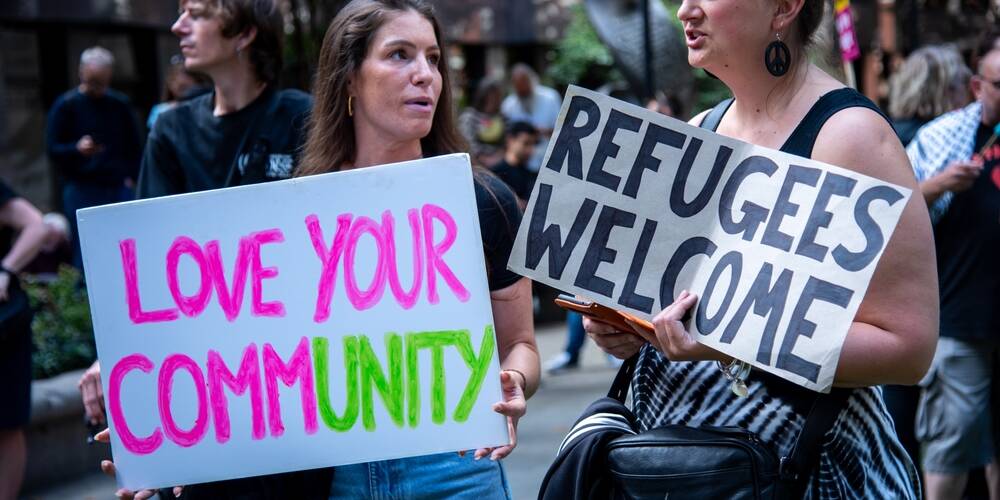

Politics is meant to be a practice that allows all viewpoints and issues to be heard and discussed, so that people can come together and listen to each other. Politics also happens to be an essential feature of our society, giving ordinary people a say on what happens. From a theoretical perspective, Politics, as a subject, aims towards justice and fairness, as far as these are possible. Given all these benefits, one would expect young people to be queueing to have their say on important matters. But that hasn’t been the case. As countless general elections, including the last one, indicate youth turnout remains low.
So, why don’t enough young people get involved in politics?
An Old Man’s Game
For many young people, politics can feel like an old man’s game; an endless cycle of the same issues and debates, often remaining unresolved, and leaving us feeling bored or uninterested in the news. I, too, am not immune to this. Lately, I have found myself feeling disengaged and, quite frankly, exhausted by the news. So what has gone wrong? After all, young people keep being told that our voices are important and valuable; that we are the voice of the future. So why do so many of us seem not to care about decisions that come to affect our lives?
One answer is that we lack faith in the people in power to care about us or what we are fighting for. There is evidence to back this up. A 2022 report by the UK Government found that 60 per cent of young adults aged 18-25 agreed with the statement: ‘politicians don’t care.’ Furthermore, research from Grosvenor suggests that only 8 per cent of young people aged 16-18 had taken part in a public consultation, revealing a worrying level of disengagement in local issues.
But despite these grim statistics, the truth is that, deep down, we do care. We all have opinions and convictions that correspond to political ideologies, and these come quite naturally to us since we are social beings living in society. It may sound like a giant cliche, but we are not the issue. Rather, the system is the issue. Allow me to explain …
An Impenetrable Wall
Part of the problem is accessibility. How are we meant to engage with a system that we cannot understand and that, arguably, we were never meant to understand? More importantly, how is this lack of political literacy our fault? Political language is often difficult and convoluted, making it less accessible to those who are unfamiliar with its basic terminology. Imagine trying to explain your favourite film to someone, but only using technical terms about the camera quality and sound production. It makes it much harder for the other person to understand, and more importantly, to engage with the topic. This incomplete understanding is both frustrating and alienating, causing many young people to feel reluctant about taking part in a political discussion.
Then, there is the issue of what happens when we do engage. A study by the University of Cambridge found a 16-point increase in support for populists (politicians who focus on appealing to people’s core feelings) than moderates (politicians who focus on policies in the centre of the political spectrum) among young people. Whilst there is nothing inherently wrong with populism, it often appeals to our emotions rather than the truth or our real values, meaning that people who vote for populist politicians often don’t know what they are voting for. The surge in populism’s popularity suggests a lack of political literacy, a key skill for making informed political decisions. It is arguably not our responsibility to seek out political literacy. Instead, our social system must provide a basic education for young people to be able to navigate politics and political discourse.
A Sad Truth
The sad truth, however, is that the people in charge and the system we have in place are fundamentally against change. They are not keenly interested in educating teenagers about politics because it does not serve their purpose. But as sad and dispiriting as this may be, we cannot let it control us. If we don’t fight back, then we send the message that we don’t care. That we are more than happy to sit back and take no active role in politics.
When so many of the most pressing national and global issues predominantly affect young people, such as rising university fees and global warming, is this the message we want to send? Across the world, young people are being stripped of their voices. We are lucky to still have ours. But if we continue to be silent and passive, we too may lose our voice.
Power is With Us
If we want to fight back, there is plenty we can do to raise awareness of the importance of political activity among young people. For instance, non-profit organizations such as the Patchwork Foundation focus on giving young people, especially those from marginalised communities, a voice and a place in politics. The UK Electoral Commission hold outreach programs to try and bring more people into politics from an early age. These are just two examples, but there are so many other organisations globally, nationally and locally that are committed to giving young people the representation we deserve and need in a political system that doesn’t want us there.
There is plenty to be hopeful about. Another University of Cambridge study found that support for populist politicians fell an average of 11 points in the coronavirus pandemic. This suggests that we are not at the mercy of silver-tongued politicians. We can make up our own minds and we can change things — but first, we must find our voice.
So, remember to make a difference. We must all play our part. It’s ok to not care about politics 24/7, but if we completely disengage from what happens around us, we help nobody. Just by reading this article, you are engaging. But don’t let your involvement stop here.
Use your voice.
Vote for what matters.
Make them listen.
The only way to disprove the stereotype of youth apathy is to break it.
DISCLAIMER: The articles on our website are not endorsed by, or the opinions of Shout Out UK (SOUK), but exclusively the views of the author.