
For decades, we have been fed the lie that wealth inequality is somehow in our interest. Under the watchful eyes of our feudal overlords, we have emptied our pockets largely for their benefit and offered gifts of tax breaks and influence like slaves to some divine economic structure. To toy with the idea of wealth redistribution would be a grave thoughtcrime.
But despite what you may hear about the exodus of billionaires, inequality is soaring, while the wealth of the top 1 per cent is booming like never before. This system, which is proudly paraded by the media and the political class, is deeply broken — because it was never intended to work for us, ordinary citizens, in the first place.
A Quiet Revolt
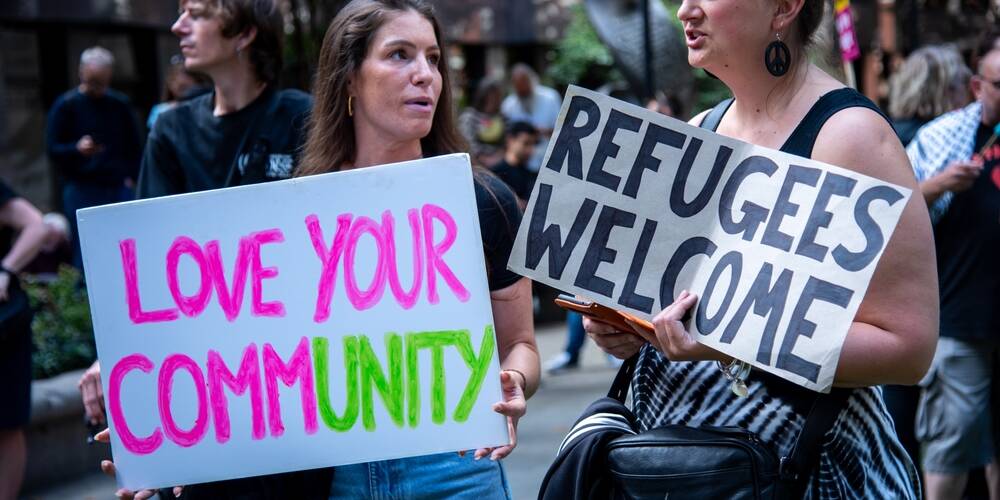
Something has been brewing in response to the rising wealth gap. In the dark rooms and alleyways of this oligarchal society, the people have begun to organise. The idea of a wealth tax has been floated as a quiet act of revolution. A stand against not just the powerful but the very system that hands them their privilege. Many who advocate for this policy do so on moral grounds. Zoe Garrett, leader of the Green Party London Assembly, said on LBC that she would: ‘rather a few billionaires left our country than our disabled people died.’ Whilst she is absolutely correct, the Left must not retreat from the economic front. Specifically, we should not bow down to the narrative that a wealth tax will cause a billionaire exodus. Instead, we must make it unequivocally clear that such a tax will lead to higher growth and more money in everyone’s pockets. And, should we fail to do this, then we can expect to be subject to the Thatcherite smears of wanting the ‘poor to be poorer, given the rich be less rich.’ Restoring economic credibility to the idea that a wealth tax is not a problem but a solution is the aim of this article.
Idle Assets
Imagine a mansion on the coast of Cornwall. This is what is called an ‘asset,’ but importantly, it is an utterly unproductive asset. Why? because it does not generate value for the exchequer. It simply sits there as idle wealth. If the government decided to tax assets such as this mansion at a higher rate, then the money generated could be used to invest in education, industry, and work opportunities. This way, a bulky mansion becomes a means of creating growth towards the creation of a more sustainable economy. Taxing assets is also prudent because the argument ‘it will just move to a different country’ does not apply here. The mansion in Cornwall will stay put, so any cash flow to the government is fairly reliable.
Assets like mansions, yachts and dormant capital don’t circulate or generate productivity. They store wealth rather than deploy it. By contrast, investment in early education, public transport, affordable housing or tech infrastructure has higher fiscal returns — for every £1 the government spends, it yields more than £1 in GDP growth. If we redirect unproductive wealth to more productive alternatives, the path towards a fairer and more prosperous society becomes more attainable.
The above is an argument frequently used by Gary Stevenson, a former Citibank trader turned inequality analyst. Stevenson sees hoarded wealth at the top (such as vast estates, properties and yachts) being akin to blood clots in an economic artery, since capital that isn’t flowing suffocates growth.
A perfect example of this is Liz Truss’ (the nation’s supply teacher) 2022 mini budget. This disastrous idea was best summarised by comedian Russel Howard: ‘This rich person gets a tax cut, he then spends that money on things that he needs like watches, champagne, cars, cleaners, restaurants, maybe even a pet ostrich, the money trickles down and everyone’s minted. But this is the truth: the rich person gets given more money, but already has everything he needs. The rich get richer and everybody else gets nothing — except the ostrich who gets a monocle.’
This is absolutely true. When the flow of capital stops at the doors of the rich and the market crashes, it is ordinary people who have to pick up the bill. Not only is this ethically abhorrent, but it is also economically destructive. Over the last decade, taxes grew, inflation climbed, and mortgage rates soared. For all those media hosts insistent on hammering the narrative that a wealth tax would be bad for our economy, remember Liz Truss and look at the evidence before you.
The Haves and Have-Nots
Going back to Russell Howard’s astute observation about the rich already having everything they need and the poor not having the money for the things that they need. This goes to the heart of something argued by Yanis Varoufakis. According to Varoufakis, when capitalism is left unchecked, it cannibalises itself. Concentrated wealth starves demand — the engine of growth — because billionaires can only buy so many yachts (or pet ostriches), while millions can’t afford the necessities.
Let me explain this further. Our capitalist system relies heavily on demand. Growth is rooted in people buying things; this is something called the ‘multiplier effect.’ When people spend money on goods and services, businesses earn more and hire or pay more. In turn, workers then spend their income, repeating the cycle that leads to high growth. However, if demand is low because the rich already have everything they need and the poor cannot afford to buy what they need, then demand nose-dives and the cycle becomes broken, leading to low growth.
In principle, a wealth tax would fix this. By redistributing excess wealth at the top, the lower classes could be lifted out of poverty and empowered with money to buy goods and services, reigniting the multiplier effect.
The slogan ‘Tax the Rich’ is sometimes attacked for lacking nuance and understanding. It is also often accompanied by the claim that ‘A Wealth Tax would be bad for the economy.’ The next time someone says that, stop and think. Consider the arguments outlined in this article, do some research, and then decide which side lacks nuance and understanding.
DISCLAIMER: The articles on our website are not endorsed by, or the opinions of Shout Out UK (SOUK), but exclusively the views of the author.