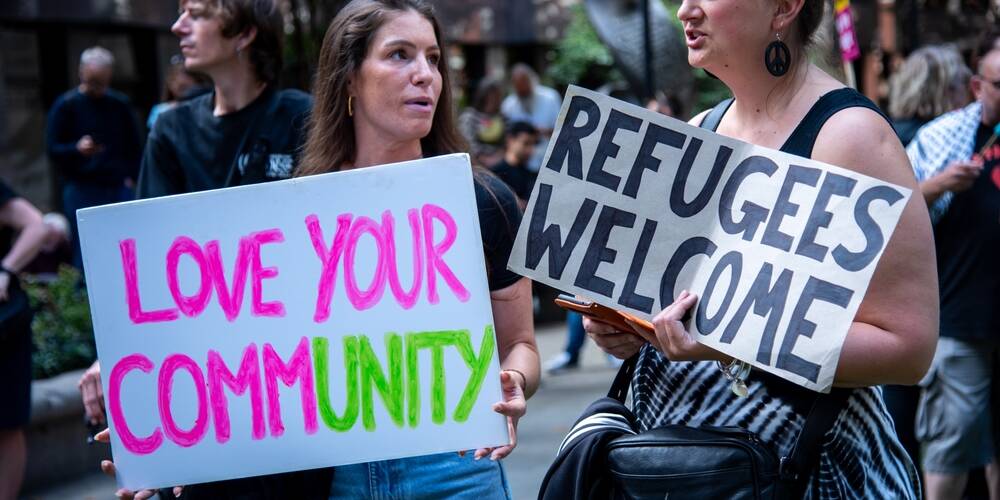

When opening TikTok or Instagram, it takes seconds for a viral video of a political nature to jump out. Such videos are standardly short, funny, maybe a little outrageous, and notably, they contribute to a culture of compressing complicated and often convoluted issues into a simple binary: good versus bad, right versus wrong. Despite these shortcomings, millions of people like, share and comment —which is the real purpose of these videos.
Short-form vs Long-form
Social media content differs from traditional forms of information giving. Vides on social media often have ‘explain’ inflation, and international conflicts can be condensed into 30-second animations. Now compare this to an article or a documentary. These mediums will reinforce facts with credible evidence, and there is usually plenty of nuance that allows readers to examine an issue from different perspectives. However, these forms of media suffer from a lack of engagement and very rarely go viral, if at all.
This rapid growth and blind faith of the electorate in short-form media is causing a phenomenon known in psychology as the illusion of explanatory depth — when people believe they know more about a topic than they actually do. This phenomenon is also responsible for fuelling adversary politics, driven by division, as binary media forms lead people to binary conclusions where compromise becomes impossible.
Resultantly, people are driven to think that the opinions of professionals and intellectuals are vacuous and insignificant, as are the opinions of our political opponents. And so they are dismissed by those who have a false sense of understanding and an inability to recognise the value in opposing viewpoints. These modern attitudes are instilled by the very media we consume. To correct this, media literacy in the age of TikTok must take a new role: educating the public not only on how to analyse the credibility of the sources they digest but to scrutinise which formats of media they consume, to understand the effects this may have.
The Age of Tribal Thinking
According to recent statistics, 82 per cent of 16-24 year-olds use social media as their primary source of news. This clearly demonstrates the profound impact the platform has in shaping how young people engage with current events. Young people’s reliance on a combination of emotionally charged soundbites and an algorithmic echo chamber threatens to eradicate all nuance from the media — something which undermines the very foundations of the liberal democracies we live in, contingent on the ability of its citizens to weigh evidence and deliberate on key issues. In the short term, we will see a rise in ideological rigidity, where people may feel as though they can explain complex issues after having watched a 30-second video. What results is a growing section of the population unwilling to engage with opposing viewpoints, less open to compromise, and more susceptible to tribal thinking.
This is no exaggeration. We are already seeing the effects of this online as political conversations collapse into hostile arguments, and platforms like X become breeding grounds for hatred. In an attention economy, where human attention has become a valuable commodity, there is little room for uncertainty or balance. Public discourse has become a battleground of absolutes, with little attention paid to the grey areas. It is in these areas, however, that the real solutions often lie because they rely on compromise and seeing the best of both worlds. But these middle grounds are typically complex and far too intricate for a creator’s catchy video.
Once again, the illusion of explanatory depth is what makes this even more dangerous. The content we consume from social media feels like learning, but genuine understanding requires more than a passive swipe: it demands time, contradiction and questioning. It also requires experiencing a certain level of discomfort, something social media avoids at all costs. Algorithms know your tendencies and will feed these back to you until your feed consists of only your own biases.
Media Literacy as a Must
This is where we must see media literacy as a democratic necessity. We must move beyond simple lessons in spotting fake news. Media literacy in 2025 must address the deeper, less superficial question of how the structure of the media shapes not only what we think but how we think. It means asking deeper questions, analysing the validity of the narrative and, importantly, what is missing from it. It must also address the risk of legitimising spurious claims, such as Trump’s unsubstantiated assertion that paracetamol causes autism.
These are the questions that must be part of school curricula and reputable social media platforms. But it can only start when educational institutions recognise that the traditional hierarchy of information is no longer relevant. Like it or not, young people are learning from TikTok, Instagram and YouTube, and our education system needs to fight this by equipping students with the tools needed to navigate such platforms.
Whilst it is of paramount importance to push legislators to make parliamentary changes, some responsibility lies with the creators themselves, who must make an effort to engage ethically with the truth, rather than merely entertain. Their role must extend beyond the pursuit of monetisation to a point where they are actively considering the potential consequences of misinformation and the voices they choose to promote.
Reviving nuance won’t be easy, but it is a necessity that will benefit everyone. Without nuance, there is no understanding, and without understanding, there is no empathy. And without empathy, we are starved of morality and progress.
DISCLAIMER: The articles on our website are not endorsed by, or the opinions of Shout Out UK (SOUK), but exclusively the views of the author.