
Who would have thought that a Londoner’s wish to ‘do more to protect women and girls’ would cause such hullabaloo?
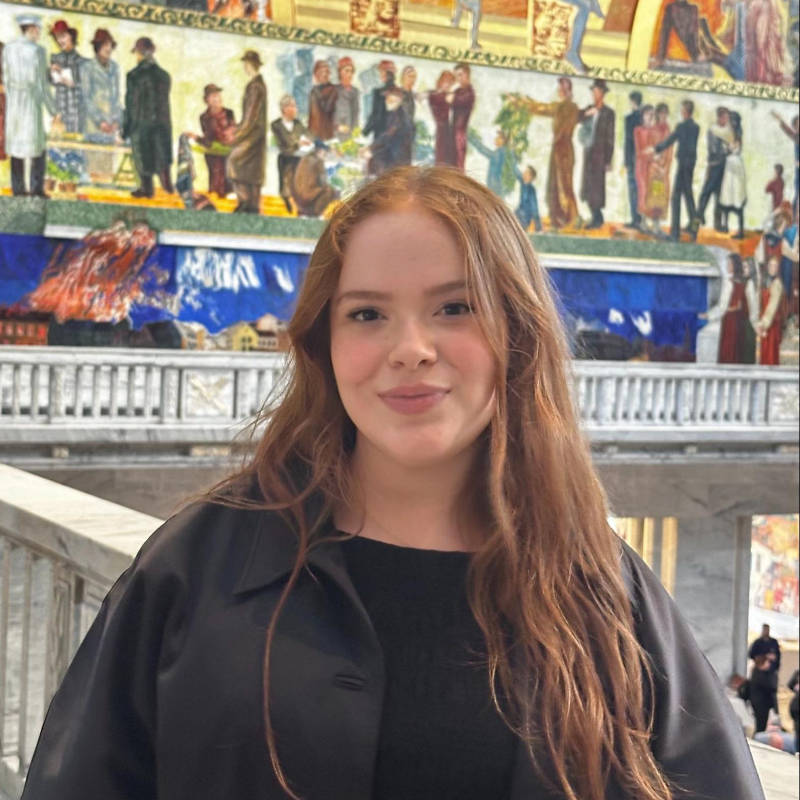
Last month, 21-year-old Camille Brown started a petition to introduce women-only Tube carriages in a bid to tackle the rising rate of sexual harassment incidents on the London Underground. It soon went viral.
Her concerns are not simply hysteria, but, as Brown puts it, a ‘growing issue.’ In the first half of 2025, there were over 900 reported cases of sexual offences across TfL services, a 3.1 per cent rise from the same period the year before. And, as research from the University of Manchester indicates, the number of unreported incidents will be significantly higher. In particular, TfL noted a significant spike in sexual harassment on the Elizabeth Line, London’s bus network, and the Underground. Viewed against this backdrop of escalating violence, Brown’s petition makes perfect sense.
Horror Stories
We’ve all heard the horror stories of women and girls being regularly stalked, catcalled, groped or spoken to inappropriately by strangers on the tube. Sometimes, it is unsuspecting ladies being followed and filmed after a night out. Other times, it is teenagers being leered at while in their school uniform. Over three-quarters of women in the UK aged between 18 and 24 feel unsafe in public spaces because of the actions of men. That’s why when I first heard about the concept of female-only transport, I couldn’t help but think positively of it. And I’m not alone in this. Brown’s petition has over 14,000 signatures, while a group of French women recently launched a similar campaign to introduce women-only carriages in Paris.
Clearly, this is an issue that resonates with people from around the world, not just London. Ladies are sick of being harassed in public spaces, and having single-sex carriages would alleviate their fears. At last, women would be able to travel freely from one destination to another without constantly having to look over their shoulders or dodge creeps. Done properly, women-only transport could be a genuine game-changer for London’s female population. A brief look at other countries supports this.
Around the World
Read any reports from women who frequently use single-sex transport, and you’ll find that their experiences are overwhelmingly positive. In Delhi, a journalist for NPR writes of how female-only metro cars provide a ‘secure space’ for women where they can be ‘free from the male stares and aggressions’ that they endure elsewhere in the city. She goes on to detail the beneficial effect the move has had on ladies from all walks of life, both young and old, poor and wealthy. This mirrors the experiences of women in Malaysia, who told reporters that riding on female-only coaches gave them ‘peace of mind’ after they were introduced in 2024. Malaysian train operator Rapid KL reported that the number of harassment complaints fell from between eight and eleven per quarter in 2023 to three after the introduction of women-only coaches, despite ridership increasing over this period.
Over in Germany, female-only compartments have existed on some train routes since 2016 (at customers’ request). This highlights that in both developed and developing nations, the benefits of making women feel safer on public transport could be endless. A safe woman is liberated from the fear of a man being a potential predator. A safe woman is also more likely to travel further afield to better educational institutions or higher-paying jobs, which boosts the economy.
But to determine whether female-only transport truly protects women, let’s do a quick comparison between two countries. Japan is often portrayed as a relatively safe nation with little crime. But this is not a view shared by the fairer sex, especially when you consider that a high proportion of Japanese women have experienced chikan (groping) and butsukari (being shoved) on trains. Meanwhile, in Mexico, whose President was recently groped by a stranger in the street, violence against women and girls remains rife. Both nations have had some form of single-sex transport for several years now, with varying degrees of success.
Fortunately, cases of sexual harassment have fallen by 26 per cent in Mexico since the inception of female-exclusive metro wagons. That’s a significant reduction, although one which hasn’t materialised in its Japanese counterpart. Lewd behaviour towards women fell by a paltry three per cent a year after pink train carriages were introduced in Tokyo. Proof, unequivocally, that single-sex carriages may not be the easy solution everyone hopes for. It also confirms that women’s perceived sense of security is often merely an illusion.
Displaced, Not Eradicated
Female-only train carriages can protect women and girls during a journey, but what protection do they offer them while waiting at the station, or in the street, the workplace, the gym, the club or their homes? None whatsoever.
Gender segregation on public transport just displaces misogyny. It does not eradicate it, and it most certainly doesn’t acknowledge the root cause of sexual assault, which is men believing they are entitled to a woman’s body, with or without her consent. Tackling gender-based harassment will take a societal shift, but a necessary one. This begins with holding men with malicious intentions accountable, rather than merely urging women to avoid them.
Laura Bates, founder of the Everyday Sexism Project, agrees. She argues that the idea of implementing women-only carriages on the Tube ‘sends a wider message that these kinds of assaults are inevitable and we should just coop women up to try and avoid them.’ This sentiment has been contested by research from Prof Marianne Vanderschuren of the University of Cape Town, which champions ‘the need for safe and secure transport’ for women, but concludes that gender separation on public transport ‘does not address the underlying issue that [gender-based harassment] is unacceptable behaviour.’
Women are feeling unsafe on the Tube, but segregating the sexes is not the solution. Instead, we must build trust with female commuters by ensuring that they feel listened to when they report these incidents. In addition, rail staff need to be trained to adequately assist victims of sexual harassment, whilst police must impose harsher punishments on those who seek to intimidate women and girls on public transport.
Passengers who have experienced sexual assault or harassment on public transport are urged to report the incident to the British Transport Police by texting 61016 or calling 0800 40 50 40
DISCLAIMER: The articles on our website are not endorsed by, or the opinions of Shout Out UK (SOUK), but exclusively the views of the author.