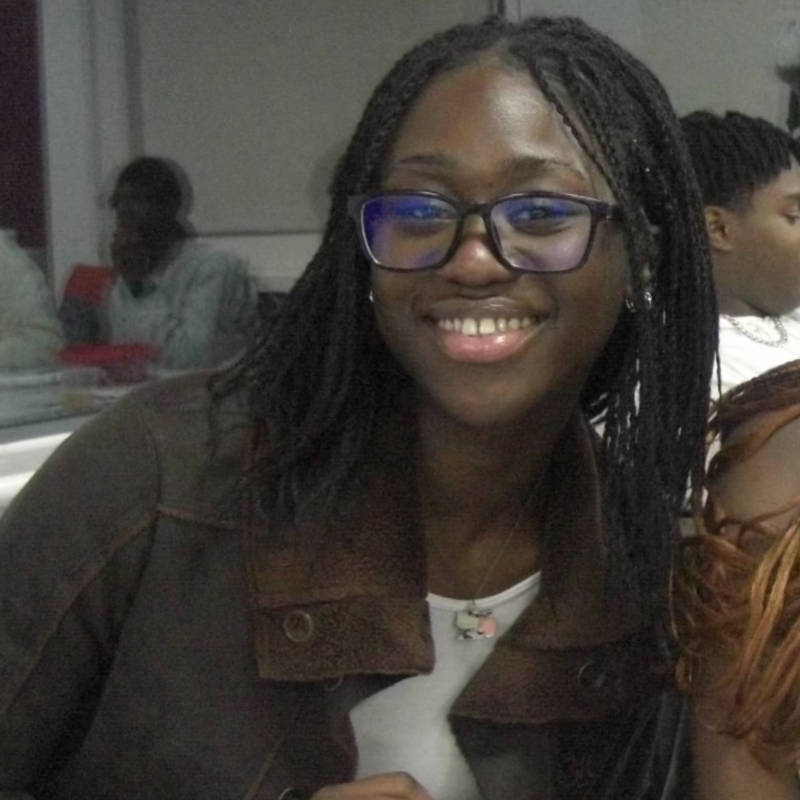

One of my earliest memories is sitting on my mother’s lap, watching a football match. Seeing a goal hit the back of the net at an angle only Pythagoras would know, and being submerged in raucous roars that cascaded among family members was exhilarating and unifying. I religiously wore my Arsenal shirt, posters of Ian Wright and Ronaldo emblazoned my bedroom wall, and I scrimped and saved for a coveted ticket to Arsenal’s last match at Highbury.
Football was freeing and exciting, typified by baggy shirts and grit, a universe away from the pleated skirts of netball and hockey at my middle-class girls’ school. It provided both escapism and the intoxicating tribal allegiance demanded of youth.
A Historic Moment
My childhood was no exception when it came to football. The beautiful game is the world’s most popular sport, and the FIFA World Cup is the most-watched sporting event globally. Born and raised in London, there has always been the obligatory England support at such tournaments. But this World Cup is different. For the first time in 40 years, Iraq has qualified for the tournament, and as an Assyrian whose family has roots in the country, this brings up an added layer of both interest and emotional significance.
Four players of Assyrian heritage have made it to the Iraq squad this year. That’s 15 per cent of the team despite Assyrians making up less than 1 per cent of the population of Iraq. If you didn’t know, Assyrians are an indigenous ethnic group from Iraq, Iran, Syria and Turkey and are mostly Christian.
I, and many other Assyrians, irrespective of location or country of origin, have eagerly anticipated Iraq’s matches, feeling beyond ecstatic that our fellow kin are featuring on this prestigious stage. But despite our joy and sense of pride, a certain heaviness weighs over us, too.
Invisible People
As the Iraq team walked out onto the pitch in Boston on Tuesday to face Norway, I was reminded that the Assyrian players were standing for an anthem not in our own mother tongue, to a flag of an Islamic state, representing a country whose constitution still does not recognise us as an indigenous people.
I do not doubt the genuine camaraderie across the smorgasbord of sects and ethnicities comprising the lineup, but the Assyrian presence is a key example of Iraq’s paradoxical relationship with our historic existence. The Iraq national football kit is awash with geometric Assyrian motifs. The squad itself (albeit not a recent conception) are known as the Lions of Mesopotamia. Even the cover of Sports Illustrated featured an Ashurbanipal-like figure, flanked by two Assyrian mythical winged bulls, to celebrate Iraq’s footballing ascent. All things Assyrian are part of Iraq’s national branding, except actual Assyrians. Romantic aestheticisation of our identity is nothing new. It is embedded in Iraq’s national consciousness and mirrored societally. Whether it be the recent mounting popularity of Arabs selecting Assyrian names for their newborns, or the tenuous extrapolation of DNA results to assert ancient lineage, Assyrian heritage is a dominant part of Iraqi identity.
Countless media posts boasted Iraq’s ‘diverse’ roster, but none used the term Assyrian to describe the players. They are simply referred to as ‘Christian.’ While accurate, it is also reductive, reflecting a wider pattern of flattening Assyrian identity. Classification via religious affiliation divorces us from our pre-Christian origins, delegitimising historical continuity as an indigenous people. This erasure sits uneasily alongside the long-standing contribution of Assyrians to Iraqi football, such as striker Ammo Baba. Baba is commonly regarded as one of Iraq’s greatest ever players (1950s–60s), who later managed Iraq to Gulf Cup wins and their first World Cup in Mexico in 1986.
While Assyrians are historically rooted across several countries in the Middle East, featuring at senior football level has always been overwhelmingly concentrated within the Iraqi national setup. Outside of Iraq, participation has been almost entirely absent, with the exception of US-born Steven Beitashour, who was included in Iran’s 2014 World Cup squad. In this sense, Iraq occupies a peculiar position as the primary site of Assyrian footballing representation, even as questions around adequate recognition remain unaddressed.
Some ‘Grave Concerns’
The reality for the Assyrian community living within Iraq is one that is nowhere near as amicable as the pre-kick-off hype might suggest. A report published this year by the Unrepresented Nations and Peoples Organisation (UNPO) expressed ‘grave concern’ over the deteriorating situation faced by Assyrians living in Iraq and Syria. Land thefts sanctioned by the Kurdish Regional Government continually displace inhabitants. This is compounded by precarious security factions, many of whom possess tainted track records, blighted by human rights abuses.
Effectively, cultural visibility continues to be a shaky and dangerous prospect. A terrorist attack by a Kurdish extremist targeted Assyrians during last year’s Assyrian Akitu New Year parade in Nohadra, an incident that still feels raw for many. In November 2025, controversy marred national elections around five quota seats reserved for Christian candidates, with claims that elected representatives fail to authentically reflect the community. It is no wonder that the demographic erosion continues. Latest estimates from the Shlama Foundation suggest the current population is approximately 140,000. A sharp decline from the 1.5 million pre-2003.
To paraphrase former FIFA president Sepp Blatter: ‘It’s football, not politics.’ Yes, but the awkward juxtaposition of the bleak realities faced by Assyrians alongside the World Cup’s celebratory spirit is difficult to ignore. The political backdrop matters. Football, given its unmatched scale, increasingly sits at the intersection of sport and geopolitics, where questions of belonging and recognition are never entirely absent.
Identity Politics
The run-up to the tournament has been anything but smooth. Uncertainty was rife over whether Iran would even be allowed to take part due to the ongoing conflict. An Iraqi player was subjected to seven hours of interrogation at Chicago airport, whilst the team photographer was denied entry altogether.
We can also all recall the ubiquitous cries to boycott the Qatar World Cup over LGBTQ+ rights or how the Iranian women’s football squad refused to sing the national anthem at the Asia Cup — poignant in highlighting that representing a nation does not always equate to an endorsement of the state. We see the identity politics closer to home, too, with England players such as Bukayo Saka. Praised as a national hero by the tabloids when he scores, but told to ‘go back to where you come from’ by fans when he missed a penalty, Saka’s experience demonstrates a reality that co-exists with his life on the pitch. That’s why, for some, turning up just to play football isn’t an option. There is much more beyond the game itself.
Three of the Assyrian players are Swedish nationals and one Danish, all eligible to play for their countries of residence but choosing otherwise for sentimental reasons. This is apparent given that Sweden and Denmark are ranked higher by FIFA than Iraq. There is also the privilege of coming from Europe. Players can benefit from stronger development systems and higher profiles. The irony is that this arguably provides more pathways into a national team than if these players were within domestic Iraqi football structures. There was a fifth Assyrian player, Australian-born Peter Gwargis, who was part of the qualifying campaign. Despite being the highest goalscorer in the Iraqi Stars League, he didn’t make the final cut, sparking speculation amongst much of the fanbase about potential bias and political influence in team selection, reinforced further when none of the Assyrians made it off the bench for Iraq’s first game.
In no way do I expect the inclusion of Assyrian players to meaningfully impact political realities within Iraq. Rather, this is an attempt to evaluate the quiet contradictions that prevail where visibility and erasure coexist in the same beat. Football, for all its global reach, does not resolve these tensions, but it does make them more apparent. While I remain aware of the discomfort, I won’t be dismissing the significance this moment presents for the Iraq team and its Assyrian players. Instead, I will, for now, leave those reservations on the bench and support the team in good faith, hoping they represent themselves and their heritage with pride on the world stage.
JR Younan is a doctor, writer and stand-up comedian and winner of the BBC New Voices Award. IG: @jenandoesstuff
DISCLAIMER: The articles on our website are not endorsed by, or the opinions of Shout Out UK (SOUK), but exclusively the views of the author.