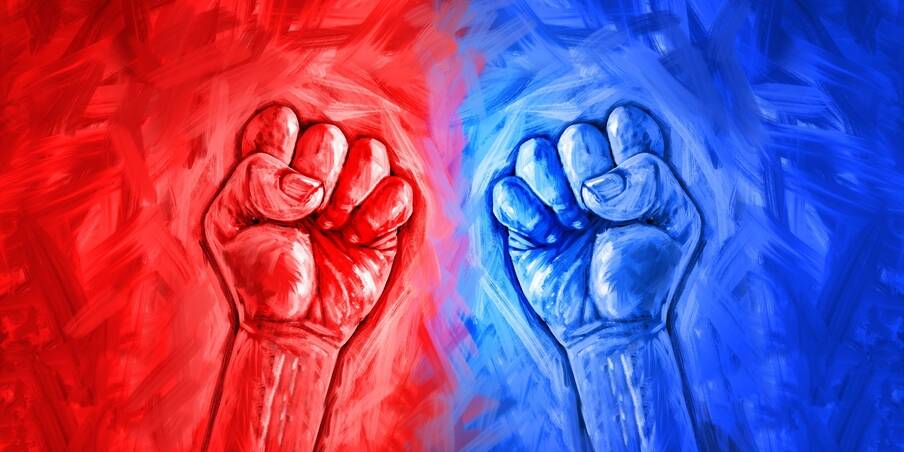

There’s no denying that social media is a versatile and powerful tool. So much of our lives are tied to online experiences that, at times, it feels impossible to escape its reach. And politics is certainly no exception. Every year, social media becomes increasingly indispensable for politicians. And every year, its implications for our democracy grow.
Understanding Democratic Agency
By all indicators, social media will play a crucial role in the UK’s upcoming elections, particularly since a significant chunk of campaigning is done online. And though there have been many updates to the law surrounding online campaigns, we, the electorate, are still at risk. Arguably, the majority of these risks come from negative campaign ads or content that criticises political opponents and their policies. Engagement with this type of content affects our behaviour, cognitive impressions and emotions. And that, in turn, affects our voting patterns. Yes, the voter is a democratic agent — but the voter is also, first and foremost, a human being.
Let’s first define what a negative campaign ad is. Very broadly, these fall into two categories: personal and policy attacks, usually with some overlap between them.
One such example comes from the Labour Party. In a post circulated by Labour during the 2024 election cycle, both Rishi Sunak and the Tories were criticised. The infamous post read: ‘Do you think adults convicted of sexually assaulting children should go to prison? Rishi Sunak doesn’t,’ followed by, ‘Under the Tories, 4,500 adults convicted of sexually assaulting children under 16 served no prison time. Labour will lock up dangerous child abusers.’ So, here we have a perfect example of two sets of attacks: an attack on the individual, in this case former PM Rishi Sunak, and one directed at his party, the Conservatives.
A recent study of voter responses to negative campaign messaging reveals that personal attack ads are generally viewed unfavourably, compared to those focused on policy accusations. Voters can and do distinguish relevant, policy-oriented criticism from shallow, overly personal commentary. The same study also found that as legitimate negative campaigns increase, people are more likely to vote.
There is certainly a case to be made that negative campaigning centred on authentic debate can incentivise people to be more politically engaged. On a basic level, these campaigns remind societies of their problems. The act of raising awareness, even with a partisan bias, can help motivate voters by reminding them of their ‘civic duty’ to protect common interests. Extensive research has further shown that owing to an evolutionary trait for ‘negative bias,’ negative political content tends to stick and makes us more likely to click.
Campaigns that focus on indirect defamation, slander and criticism receive more engagement than those which solely promote a party’s policies. This is revealing and perhaps says more about us than it does about the methods used to catch our attention. Politicians understand that conflict can be a powerful tool to mobilise voters. Social media simply provides an easy access point to activate that natural resource.
Negative Ads, Negative Thinking
Turnout data doesn’t exist in a vacuum. Negative ads can potentially influence voter numbers, but indirectly. One experiment found that attack ads reduce the public’s perception of political efficacy, degrading general trust in political institutions. This ‘trust’ is key. It sits at the core of our political mechanisms. Without it, turnout figures decline — an effect consistent with the 2024 UK General Election. Only 59.7 per cent of registered voters participated, the lowest turnout since 2001. The previous year, the British Social Attitudes survey found that 45 per cent of the public would ‘almost never’ trust British governments of any party to place the needs of the nation above the interests of their own political party.
Looking beyond these numbers, most of us will recognise the psychological impact of negative campaigning. For habitual social media users, campaign ads are like markers of a country’s political health. When politicians resort to these techniques, they reproduce an atmosphere of hostility, tension and discord. Think of it this way: what do these instances of online conflict signal to you about our government if the weapon of choice is to attack the Opposition rather than defend your core policies?
The combative strategy of negative campaigning has certain drawbacks. Political parties that heavily rely on such campaigns often inadvertently shoot themselves in the foot by undermining the very structures that support them. Weaponising the Cabinet’s neglectful actions or a politician’s controversial message often reveals a larger, more systemic issue that needs addressal. As voters, our responses are less focused on the ‘who’ and more on the ‘why’: why have our country’s mechanisms produced these subpar results? What follows is the conclusion that the UK’s democracy is failing, undermining faith in the significance of our votes, and indeed in ourselves as instrumental voters.
Of course, much of this has been speculative. The real test of the public’s faith will come at the next general election. The effects of negative campaigning vary widely between different types of voters, and within each voter demographic. Optimistically, I sincerely hope that our political candidates always remember what is most important: the people.
Politicians should never seek to disadvantage or disenfranchise the public. All campaigns must adhere to this basic principle. Yes, the art of gaining the electorate’s confidence is a crucial step for any politician. But winning voters should never come at the cost of undermining the public’s confidence in our democracy.
Tolerance, transparency, representation and faith in our country’s institutions should be the voters’ catalyst to turn up and make their mark in 2029.
DISCLAIMER: The articles on our website are not endorsed by, or the opinions of Shout Out UK (SOUK), but exclusively the views of the author.