
Voluntourism – the 21st-century blend of volunteering and tourism. Often viewed as a wholesome and morally rewarding way to spend a gap year or a summer, this industry benefits from (and arguably exploits) the demographic of young, enthusiastic people wanting to make a tangible societal difference. However, as a $1.56 billion industry existing within a capitalist society, the drive for profit often renders voluntourism organisations unethical. This, together with thinly veiled connotations of white saviourism that are associated with the industry.
Exploiting Unskilled Enthusiasts
In Biddle’s book Ours to Explore: Privilege, Power, and the Paradox of Voluntourism, she explores the origins of voluntourism as a phenomenon emerging in the early 2000s as a response to global humanitarian crises and natural disasters. Initially, it appears that voluntourism emerged from a genuine place of care and concern for fellow humans. Nowadays, companies running voluntourism programs are visibly driven by profits, and the ethicality of this practice has, in some cases, been lost.
The reality is, voluntourism programs that allow any fresh-out-of-school gap year student to go and build a school in Kenya based purely on their enthusiasm (and money) are doing it unethically. If a person does not have adequate skills to fulfil a particular role in the UK, then they equally do not have those skills to fulfil that role in Africa. It is detrimental to communities when unskilled workers are allowed not only to complete tasks but also to take jobs from the skilled workers already residing in that country. This practice prevents communities from further developing themselves and perpetuates a cycle of reliance on external aid.
The underlying attitude of entitlement frequently demonstrated by volunteers is summed up well by Biddle’s phrase ‘unskilled and dangerously empowered voluntourists.’ These young people have been imbued with the belief that what they are doing is making tangible, worthwhile change in communities, and this makes them willing to overlook their own shortcomings and the ways their presence may be more injurious than invaluable.
In Haiti, there are many orphanages which attract foreign volunteers. However, it has been estimated that around 80 per cent of the children in these orphanages have at least one living parent. Quite simply, the children are being used to create work for voluntourists in order to keep bolstering this multi-million-dollar industry. In this particular case, volunteers working in these orphanages are actively obstructing the Haitian government, which is trying to reunite these children with their families. Similar orphanages also operate in Nepal, exposing the global detriment of voluntourism.
Revival of White Saviourism
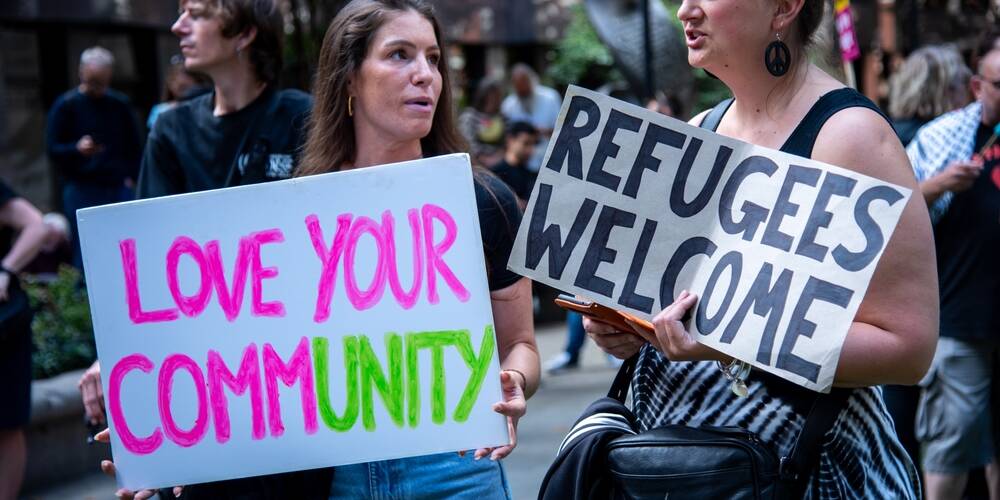
It’s also impossible to ignore the connotations of white saviourism associated with voluntourism. The implication that being British and (often) white would make someone a skilled worker in a foreign community is a modern incarnation of the idea of the West needing to ‘save’ the rest of the world. In other words, a modern incarnation of white (or Western) saviourism. It’s no wonder that looking at pictures of your white, middle-class friend surrounded by a smiling group of African school children, claiming she’s had “the most rewarding experience,” makes you uncomfortable. No one has really bothered to consider whether her contributions to that community were truly rewarding for the people living there.
This raises an important question: Can voluntourism be done ethically? The National Geographic explores several different not-for-profit organisations that run voluntourism programs. What sets these organisations apart is the fact that they are driven by the needs of the communities which they serve, rather than the need for profit.
One such organisation, Pod Volunteer, said: ‘We made an early decision that we wanted to have a relatively small number of relationships, but ones we could sustain.’ In such a huge industry, it is clear that these organisations could choose to send thousands of volunteers to thousands of locations, but this is not an ethical or sustainable solution. In this case, less is certainly more, and it is the organisations that are not concerned with profits that are the most ethical in the industry.
Intelligent Voluntourism
So, if you are someone considering going on a voluntourism trip, tread very lightly. It is imperative to research different organisations, prioritising those that are not-for-profit and that focus on the needs of a community. Ensure that you have real, valuable skills to share—sorry, but enthusiasm alone won’t cut it.
As a society, we must reframe our thoughts on voluntourism. It is not something we are entitled to, but something which is a privilege to be granted at the discretion of receiving communities. Lest we revert to colonial-era Western saviourist thinking, we are in no place to dictate what a certain community needs.
DISCLAIMER: The articles on our website are not endorsed by, or the opinions of Shout Out UK (SOUK), but exclusively the views of the author.