
Elitism has become the bane of interpersonal and political insults. It has strayed from being a passive remark to an aggressive derogatory slur. Being characterised as ‘elitist’ is associated with snobbishness and inhabiting a separate world from that of ordinary people. And the slur is being passed around like a political football. Everything and everyone is now accused of belonging to an elite class.
But what defines an ‘elite’? And how is anti-elitism being weaponised by politicians as the privileged youth reject the moniker?
A Tricky Word
The problem with ‘elite’ as an insult, or even as an objective classification, is that it can be a tricky term to define. In political sociology, elites are defined as: ‘a ruling minority, a group that controls and disputes the most important power sources.’ Elites hold significant economic and cultural power. Power that ordinary people do not hold. In a study that interviewed 312 members of the elite in a Midwestern town, specific qualities were associated with belonging to the group. These include having: ‘economic and political resources, institutional and organisational position, and connectedness in influence networks, … [as well as] interpersonal attributes of personality and respect,’ seen as additional sources of social power.
But elites differ across geographical contexts. Born To Rule, written by sociologists Aaron Reeves and Sam Friedman, analyses the rise of the British elite from the Victorian era to the present day. The LSE professors defined the British elite by drawing on the reference book Who’s Who, which lists the most influential and powerful Britons. Typically, those listed have similar traits, such as being privately educated. To see how this plays out in real life, members of the prestigious Clarendon School — which includes schools like Westminster and Eton — are 94 times more likely to make it into the British elite.
While elitism may seem like a straightforward classification where, for instance, a privately educated Lord is obviously a member of the elite, there are certain sticking points. One issue is the tendency amongst elites to reject their status as elites to be more relatable. In Born to Rule, Reeves and Friedman found that elitists who fashioned themselves as ordinary, everyday people were rated more favourably by the public. This helps explain why so often members of the elite deny accusations of elitism. Being ordinary improves acceptance.
Anti-Elitism as a Political Weapon
The reluctance to appear elitist and the associated leverage with appearing ordinary provide the basis for anti-elitism. And as populism rises across Europe and America, anti-elitism has been instrumental to its growth. Anti-elites claim that hoards of privileged elites quash the wishes of the people. This implies that it’s up to the masses, the working class and the anti-elites to rally against the establishment.
The elephant in the room here is that the so-called anti-elitists are often themselves part of the elite. Presidents, the most elitist of them all, deny accusations of elitism. David Isaac, the provost of Worcester College at Oxford, denies that the institution is elitist by drawing a distinction. Their teaching is world-class, but that does not mean the institution itself is exclusionary. This paradox holds not just for elite institutions but in interpersonal relationships. To be called elitist is associated with being stuck-up, snobbish, and pretentious. Nobody wants to befriend someone who believes they are naturally superior in virtue of their refined education or social status. And that’s precisely what makes elitism ripe for political exploitation.
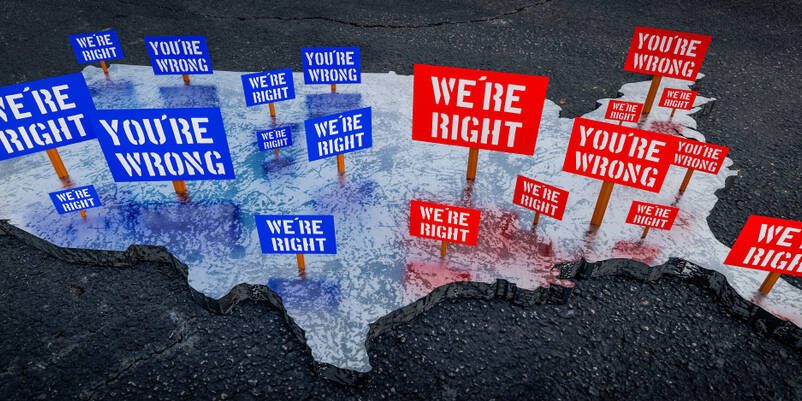
Conservatives accuse liberals of elitism. Liberals accuse conservatives of having the same problem. Elitism has been blamed for former Vice President Kamala Harris losing the election. And amongst the politically polarised, there is a tendency to ignore the reality that elitism exists on both sides of the political spectrum. And so, while carefully avoiding mention of one’s party’s particular strain of elitism, the word becomes a weapon to be launched at your political opponents. My party is for the people, while yours is the party of oligarchy and the establishment. Sound familiar?
The Subjectivity of Elitism
What is even more interesting is how members of the elite are cannibalistic. One elite will easily devour another to promote their own cause. College-educated and affluent youth are more likely to express anti-elitist sentiments than their poorer peers. But when it comes to the working class, rather than being strongly anti-elitist, they tend to refrain from having an opinion on the matter. This is where the subjectivity of elitism most comes into play.
For most of us, it would be hard to argue that making 75K per year puts you in the same spectrum of elitism as an Etonian. Yet those who earn 75K annually are a minority, forming the top 5 per cent of UK earners. And what about celebrities and musicians? The slur of being called ‘Elite’ is damaging for any politician, but the label is seldom applied to pop singers or actors who are often in a higher economic class. There is a bias then that elites are those who swim in political circles or are politicians themselves. But it should be obvious that an accountant earning 100K per year is not in the same category as Andy Burnham when it comes to social power, even if their earnings tie.
When it comes to determining what is and isn’t an instance of elitism, comparison via a relativistic approach can help. Is a state-schooler attending Oxford a member of the elite? Or are they a visitor to an elite environment? Is elitism something that can be acquired through cultural capital? Or will old money always be deemed superior to the wealth of the nouveau riche? Journalists are often the most vocal accusers of elitism, despite the profession typically being known to house elites.
As discussion and criticism of the global elite continues, it is important to have a clear perspective that accounts for small but crucial differences.
I leave you with this brainteaser: The average salary for someone in the UK is £31,704. In Haiti, it is $217.
In some ways, am I not a part of the global elite?
DISCLAIMER: The articles on our website are not endorsed by, or the opinions of Shout Out UK (SOUK), but exclusively the views of the author.

Adaeze Onwuelo
HSPS student and columnist passionate about the intersection between popular culture and political sociology!