
It’s very easy to get excited about by-elections. Commentators do this all the time. Orpington in 1962, Hamilton in 1967, Warrington in 1981, Bradford West in 2012, by-elections that promised to be the first tremors of political earthquakes, yet each failed to deliver lasting change in Westminster.
So why should Gorton and Denton be any different?
The ‘Non-Death’ of Neoliberalism
In one sense, it isn’t. It’s another example of a mid-cycle protest vote, the same as what happened in Orpington and Hamilton, and Warrington and Bradford West. But to stop there is to miss something more important. This is not a protest that will simply be absorbed by the two main parties at the next general election. Gorton and Denton points to something deeper, the steady unravelling of Britain’s political centre, and the emergence of two insurgent forces at either end of the spectrum that are unlikely to disappear.
The rise in support for Reform UK and the Green Party is not a coincidence. Nor is it simply a story of left versus right. It is a story about what decades of neoliberalism have done to British society and how voters are responding.
For years, British politics has operated within a narrow set of assumptions. Markets come first. Public spending must be constrained. Labour markets must remain flexible. And though governments of different colours have argued over the details, the basic framework has remained intact. Even crises that seemed to threaten the system, such as the 2008 financial crash, failed to make any fundamental changes.
This resilience is no accident. Neoliberalism has proved remarkably tough to budge, not just because of institutions, but because it limits what politicians feel able to propose in the first place. In short, it narrows political imagination. Competing alternatives are either ruled out as unrealistic or quietly reshaped to fit the existing model. The result is a system that can fail repeatedly, yet still reproduce itself.
The Age of ‘Liquid Modernity’
Austerity was a clear example. Neoliberal failures resulted in neoliberal responses by both Labour and Conservative frontbenches. Government intervention was deployed solely as a means of restoring market orthodoxy, and cuts in public spending were favoured across the board. But while this economic system has endured, its social effects have been anything but stable. Large parts of the country, especially post-industrial areas like Gorton and Denton, have experienced decades of economic decline and institutional erosion. Industries have disappeared. Trade unions have weakened. Collectivist and community structures that once provided identity and security have thinned out or vanished altogether.
What has replaced them is something far more fragile. Stable employment is a thing of the past. Wages are more volatile and don’t seem to stretch as far as they once did. The sense of being anchored in a stable social world has given way to something more uncertain and fragmented. Sociologists describe this as ‘liquid modernity,’ a condition in which the solid structures that once shaped people’s lives have dissolved.
In these forgotten and forlorn places, Reform UK is finding fertile ground. Its message is simple: The system is broken, the political class has failed, and the country has lost control. It speaks to voters who feel abandoned not just economically, but politically. Many of them were once part of Labour’s traditional base, tied into a network of institutions and loyalties that no longer exists. Is it any surprise then that these voters are looking for new options to reassure them?
Labour’s long shift away from those collectivist roots has left a gap. In adapting to the neoliberal era, it has loosened ties with the very communities that once defined it. Reform has stepped into that space, offering a form of opposition that is blunt, direct, and unconcerned with the obstacles that shape mainstream politics.
Flying the Green Flag
Whilst Reform’s outcome (they came second) in Gorton and Denton would have been unimaginable five years ago, it still wasn’t a win. As for Labour, a party that once dominated in such areas, they were squeezed into third place. The Greens, the party other than Reform that also represents the politics of disillusionment, won big with just over 40 per cent of the vote, and they won well.
So who exactly is flying the Green flag? The Greens’ support is primarily concentrated among younger voters, graduates, renters, and those navigating an increasingly precarious economic landscape. For this group, promises that underpinned the old political order feel hollow. Education guarantees debt rather than economic security. Work does not reliably lead to financial stability. Housing remains expensive and often out of reach. The future looks less like a path upwards and more like a constant negotiation with the forces of uncertainty.
Many of these voters were once energised by Jeremy Corbyn’s leadership of Labour, which briefly expanded the sense of what might be politically possible. But the retreat from that agenda has left a vacuum, and the Greens are filling it with a bold critique of the system that feels more radical than anything currently on offer from the political mainstream.
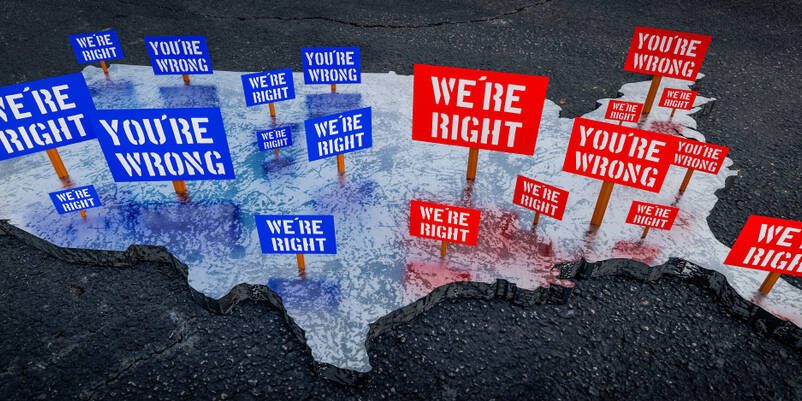
On the surface, Reform and the Greens could hardly look more different. Reform likes to talk about borders, sovereignty and national decline. The Greens prefer to focus on climate change, inequality and systemic reform. But beyond all that, they share something important. Both parties are drawing support from people who feel the effects of a political and economic model that no longer delivers security or stability. Both have positioned themselves as agents against an establishment that appears distant and unresponsive. Both are a backlash against the kind of politics that says, no, you can’t expect to support a family and own your own home anymore, and no, there are no alternatives.
And here lies the deeper significance of the Gorton and Denton by-election results. It’s not just about who gained votes, but why those votes have shifted. The political centre is losing its ability to unite voters with different experiences of the same economic system. In its place, new alignments are beginning to take shape that better address these disparate experiences.
The Onset of Messy Politics
What is happening is not a clean ideological realignment, but something messier; a politics shaped by disillusionment, fragmentation and limited horizons. Voters are looking for alternatives, but the range of credible options remains narrow. As a result, support is drifting away from the centre and towards both ends of the political spectrum.
For all their differences, Reform and the Greens are consequences of the same underlying condition: a political system that no longer delivers stability or novelty.
The Conservatives and Labour remain bound to this system. But voters don’t have to be. As they experience ongoing failures that affect their day-to-day lives, the alternatives offered by the populist left and right are exactly what they’re looking for.
Gorton and Denton was not just a protest, but a persistent call for change. Disillusionment is no longer a temporary mood, but a steady force steering British politics.
DISCLAIMER: The articles on our website are not endorsed by, or the opinions of Shout Out UK (SOUK), but exclusively the views of the author.