
Empowering Young People, Rejecting Blanket Bans, and Demanding Safety by Design
The digital world is full of opportunities for young people to connect, learn, and create. But it has not been built with their safety in mind. In fact, most of the platforms we use every day contain systemic structural design flaws which combine to expose children and young people to multiple harms including algorithmic radicalisation, mental health struggles, and predatory behaviour.
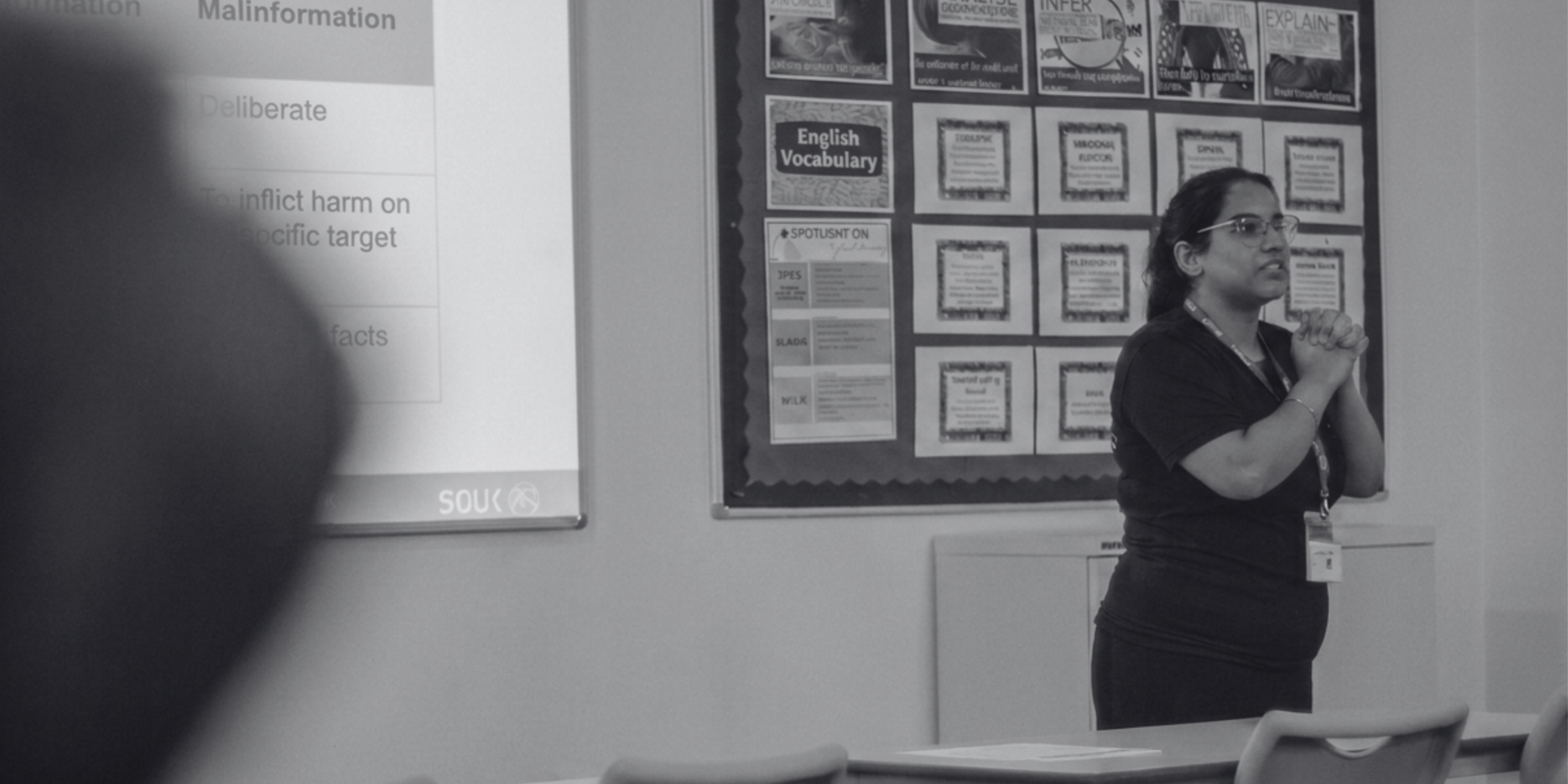
Shout Out UK (SOUK) has submitted an evidence-based response to the UK Government’s ‘Growing up in an Online World’ consultation. We argue, like many of the young people we hear from in school and colleges every day, that blanket age bans are not the way forward. Instead, the government should take this opportunity to mandate Safety by Design, and fund national Media Literacy programmes.
Evidence-Based Expertise
Our consultation recommendations are backed by a decade of regional and national impact:
9.5+ Million Users Reached: Our 2024 DISMISS campaign with Ofcom significantly boosted first-time voters’ confidence in identifying AI-generated disinformation.
1,000+ Professionals Trained: Our training has bolstered the educational and public sectors to confidently identify digital harms like deepfakes and extremism.
Local & Regional Partnerships: We’ve delivered media literacy education across all 33 London Boroughs, 6 Welsh Councils, and 40+ UK Local Authorities.
MOPAC Engagement: We’ve partnered with the Mayor of London’s Office for Policing and Crime for 4 consecutive years, training over 3,000 young people and professionals.
Why Blanket Bans Won’t Work
We oppose raising the minimum age of social media access to 16. A blanket ban may trigger severe unintended consequences. It risks exposing young people to a ‘cliff edge’ at 16, where they are suddenly exposed to online life without having learned the vital critical thinking and emotional resilience skills to navigate its pitfalls. Bans may push teenagers to less regulated, underground platforms, hiding their activity from safe adults. Parents and educators may develop a false sense of security, wrongly assuming children are entirely safe, and letting their guard down. Most importantly, a ban shifts 100% of the burden onto parents, letting tech platforms off the hook for their toxic design choices.
Our Recommendations
Instead of banning platforms, the Government must regulate the underlying architecture of online harms. We recommend setting the minimum age of digital consent at 13 , but strictly restricting high-risk features for anyone under 16.
Implement “Feature-Based Age Gating” (Under 16s) Turn Off Recommendation Algorithms: Replace personalised recommendation engines with chronological feeds to stop young people falling into algorithmic rabbit holes and echo chambers.
Ban Addictive Persuasive Design: Turn off by default infinite scrolling, autoplay, and streaks. Imperial College (2026) data links these to the chronic sleep disruptions driving adolescent depression.
Restrict AI Chatbots: Block access to “human-simulating” AI chatbots that exploit children’s emotional vulnerability and can cause psychological dependence.
Strengthen “Safety by Design” Frameworks
Mandatory Default-Private Profiles: All minor profiles must be private by default to eliminate data harvesting and public searchability.
Risky features including location sharing and contact from strangers must be off by default and only enabled through parental controls.
Restricted contact from unknown adults for children, including restrictions on adults being able to search for and find child accounts as well as contact them.
Closed-Loop Direct Messaging: Prohibit direct messages from non-mutuals to cut off anonymous trolls and online predators.
Systematic Education & Teacher Support
Close the Skills Gap: Dr. James Weinberg’s The Missing Link report found that only 1% of teachers felt equipped to teach media literacy. We need an immediate, national roadmap of multi-session teacher training.
Parental Tool Simplification: The top 8 platforms feature over 121 different parental tools. We demand standardisation and simplification so parents can transition from restricting younger children to mentoring teenagers.
Funding and Enforcement
1% Tech Levy: Establish a 1% levy on the UK profits of big tech platforms to provide sustained, multi-year funding for national media literacy programs.
Empower Ofcom: Grant Ofcom the robust legal authority to act as both a regulator and a funder under the Online Safety Act.
It is time to stop treating young people as passive victims of technology and start equipping them for a future as resilient digital citizens.

Shout Out UK
We are a multi-award winning social enterprise that provides impartial Political and Media Literacy training and campaigns focused on democratic engagement and combatting disinformation online, tailored to local circumstances and culture.