
At Shout Out UK (SOUK), we believe that democracy is healthiest when every voice is heard. However, young people in Scotland face challenges when navigating the political landscape, from navigating the “fractured franchise” across different levels of government to cutting through an overwhelming tide of online mis- and disinformation.
To better understand these challenges and build a way forward, SOUK partnered with the Electoral Commission (EC) to train up two members of our Youth Policy Development Group to act as peer researchers to conduct a six-month research project in Glasgow North East – a constituency with historically low voter turnout. By meeting 40 young people (aged 17–25) online and in colleges, youth clubs, and community hubs, we gathered vital, lived-experience insights on what stops young Scots from voting and what will empower them to participate.
Key Impact Metrics & Findings
Our peer-led study revealed a powerful paradox: young people strongly value democracy, but they are routinely tripped up by digital noise, mistrust, and information gaps.
The Top Barriers Young Voters Face
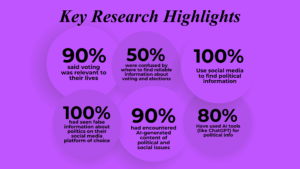
- Mis- & Disinformation: 95% of participants have seen political info online they weren’t sure was true, 65% have seen deepfakes, and 60% have encountered false info about the voting process itself.
- Knowledge Gaps & Disenfranchisement: 35% of non-voters abstained because they didn’t know enough about candidates or parties, while another 35% believed their vote didn’t make a difference.
- Political & Electoral Mistrust: 40% of non-voters reported a lack of trust in politicians, and 35% doubted the fairness of voting systems.
- Information Overload: While official government sources maintain trust, young people find them inconvenient or overwhelming compared to social platforms like TikTok.
Introducing the Educator Toolkit
As a core output of this project, we created the Engaging Underregistered Groups in Democracy: Scotland Educator Toolkit. Designed for teachers, youth workers, and community leaders, this free resource turns our research into practical, realistic interventions grounded in the real lived experiences of young Scots.
5 Key Recommendations for Educators
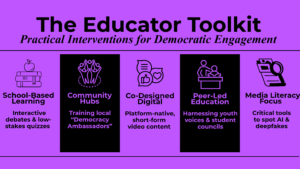
- School-Based Democratic Education: Integrate year-round, low-stakes discussions, mock elections, and debates into the core curriculum. Focus on issues that matter to young people, such as housing, the cost of living, and AI technology. (60% of young people said more education in school would make them more likely to vote).
- Community-Based Education: Meet young people where they already are by empowering faith leaders, librarians, and youth workers as Community Democracy Ambassadors.
- Co-Designed Short-Form Digital Content: Reach young voters on platforms like TikTok and Instagram using catchy hooks, visual breakdowns, and step-by-step guides.
- Peer-Led Learning: Train young people as “Democracy Champions”. Young people trust their peers just as much as official sources; peer-to-peer conversations remove intimidation and make voting a shared social norm.
- Democratic Media Literacy Education: Equip young people with tools to spot digital manipulation, evaluate AI-generated content, pause before reacting (“Check In, Check Out”), and become active, responsible content creators.
Download the Educator Toolkit
Are you an educator, youth worker, or community leader looking to boost political literacy and voter participation in Scotland? Download our free toolkit today to access step-by-step guides, activity ideas, and practical “Dos and Don’ts” for engaging young citizens.